
Running ads is easy. Getting the right people to notice your business is a little harder. But the biggest challenge starts after someone clicks your ad.
A person may see your ad, become interested, and send an enquiry. But what happens next?
If the reply is delayed, the customer may move on. If there is no proper follow-up, the lead may be forgotten. This is where Meta Ads and WhatsApp API can work together.
When these two tools are connected properly, businesses can create a smoother journey from the first ad click to the final customer conversation.
Understanding Meta Ads
Meta Ads are paid advertisements that run across platforms such as Facebook and Instagram. Businesses can use them to reach people based on factors such as their interests, location, behaviour and demographics.
For example, a salon in Chennai can run an ad targeting people in nearby areas. A real estate company can promote a new property to people who may be interested in buying a home.
The main goal is simple: reach the right audience and generate genuine enquiries.
But getting enquiries is only the beginning.
Understanding WhatsApp API
WhatsApp API, also known as the WhatsApp Business API, helps businesses manage customer conversations at a larger scale.
Unlike a normal WhatsApp account, businesses can use the API to connect WhatsApp with their systems and automate parts of their communication.
For example, when someone responds to an advertisement, the business can use WhatsApp to:
This makes communication faster and more organised.
The Power of Combining Meta Ads with WhatsApp API
Think about the customer journey.
Someone is scrolling through Instagram and notices your advertisement. They like the offer and click the WhatsApp button.
Now, instead of asking them to fill out a long form or wait for a phone call, the conversation can start directly on WhatsApp.
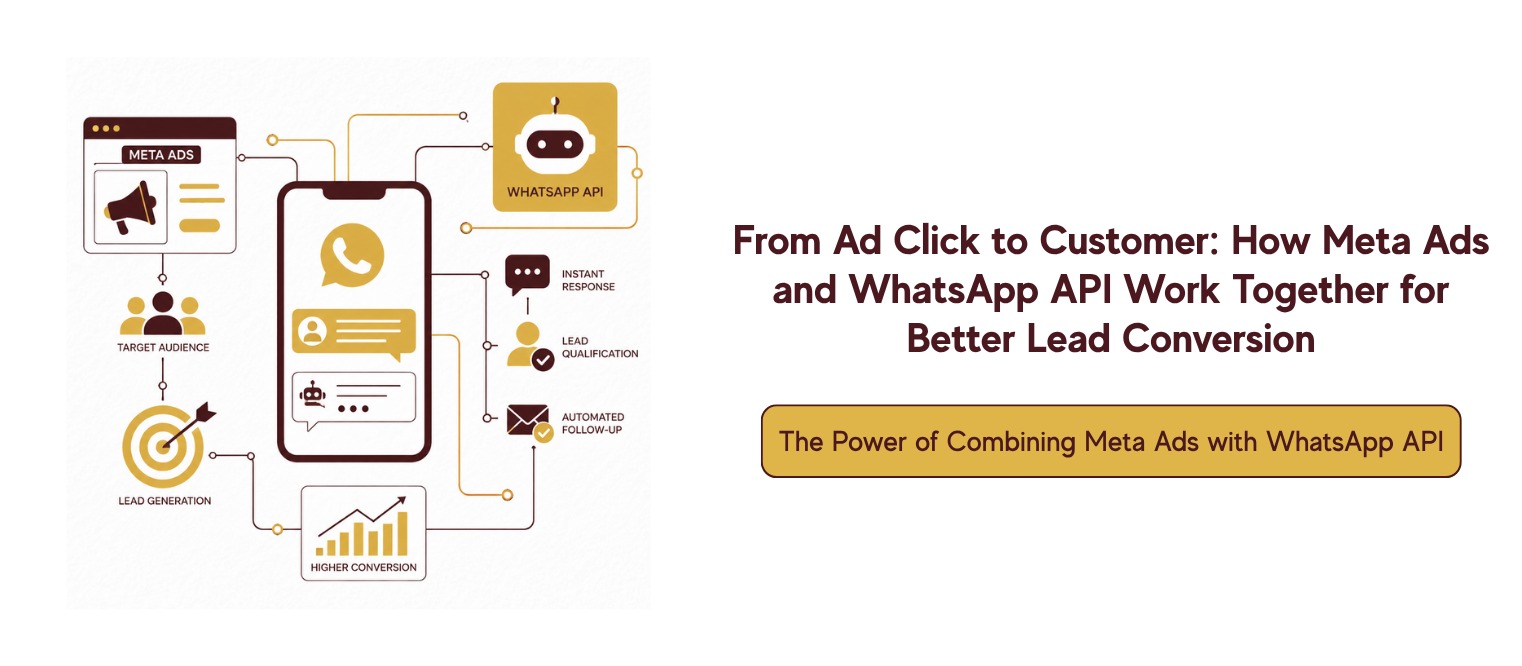
The journey can look like this:
Meta Ad → WhatsApp Enquiry → Instant Response → Lead Qualification → Follow-Up → Customer
This is where Meta Ads and WhatsApp API become useful together.
Meta Ads help bring potential customers to the business. WhatsApp helps the business continue the conversation.
The Customer Journey: From Ad Click to Conversion
1. Customer Sees the Ad
The process starts with a well-targeted Meta Ad.
The ad could promote a product, service, special offer, consultation or enquiry form. The important thing is that the message should be relevant to the audience.
2. Customer Starts a WhatsApp Conversation
Instead of simply visiting a website, the customer can click a WhatsApp call-to-action and start a conversation.
This removes extra steps and makes it easier for interested people to ask questions.
3. The Customer Gets a Quick Response
Speed matters when someone is interested in a product or service.
With WhatsApp Automation, businesses can send an initial response without making the customer wait.
For example:
“Hi! Thanks for contacting us. How can we help you today?”
It is a small step, but it keeps the conversation moving.
4. The Lead Can Be Qualified
Not every enquiry is ready to buy immediately.
A business can ask simple questions to understand what the customer needs.
For example:
This helps businesses separate genuine prospects from casual enquiries.
5. Follow-Up Becomes Easier
Many businesses lose potential customers because they do not follow up at the right time.
With the right WhatsApp Marketing Automation, businesses can organise follow-ups and send relevant messages to customers.
The goal is not to send messages repeatedly. The goal is to stay connected without becoming annoying.
Turning Leads into Customers
Getting more leads does not always mean getting more customers.
A business may receive hundreds of enquiries but still have a low conversion rate if the follow-up process is weak.
Combining Meta Ads for Lead Generation with WhatsApp communication can help businesses:
Respond Faster
Customers do not have to wait too long for an initial response.
Reduce Missed Enquiries
Messages can be managed in a more organised way, reducing the chances of leads being ignored.
Build Better Conversations
Instead of sending customers through multiple channels, businesses can continue the conversation on WhatsApp.
Improve Follow-Up
Interested customers can be contacted again when appropriate.
Understand Customer Needs
Businesses can collect useful information during the conversation and provide more relevant responses.
A Simple Business Example
Imagine a dental clinic running a Meta Ad offering a consultation.
A person sees the ad on Instagram and clicks the WhatsApp button.
They receive an initial message and ask about the consultation. The business can then collect basic details, answer their questions and help them book an appointment.
The ad brought the person in.
WhatsApp helped continue the conversation.
The follow-up helped move the person closer to becoming a customer.
That is the basic idea behind lead conversion.
Where Meta Ads Alone May Fall Short
Meta Ads can generate excellent visibility and enquiries, but the work does not end when someone clicks the ad.
If a business takes too long to respond, gives unclear answers or does not follow up, a valuable lead can be lost.
This is why businesses should look beyond just getting clicks.
The real question is:
“What are we doing after the customer clicks?”
Common Lead Management Mistakes
Slow Responses
A potential customer may contact several businesses at the same time. A delayed response can mean losing the opportunity.
Sending the Same Message to Everyone
Customers have different needs. Communication should feel relevant rather than completely generic.
No Follow-Up
Some customers need time before making a decision. A proper follow-up can keep the conversation active.
Focusing Only on Leads
Getting more leads is not the final goal. Businesses should also focus on the quality of leads and how many of them actually become customers.
Businesses That Can Benefit from WhatsApp API
It can be useful for businesses that receive regular customer enquiries and need a better way to manage conversations.
It can work well for industries such as:
The exact strategy depends on the business, audience and campaign goal.
Looking Beyond the Ad Click
Meta Ads and WhatsApp API should not be treated as two completely separate marketing tools.
Meta Ads can help businesses reach potential customers.
WhatsApp can help businesses communicate with them.
Automation can help manage repetitive communication.
And a good follow-up process can help turn interested people into actual customers.
That is why businesses should think about the complete customer journey instead of focusing only on ad clicks.
Final Thoughts
A successful digital marketing campaign is not just about getting someone to click an advertisement.
It is about what happens after that click.
By combining Meta Ads, WhatsApp API, automation and proper follow-up, businesses can create a smoother path from the first enquiry to the final conversion.
If you are looking for a Digital Marketing Service in Chennai that focuses on both lead generation and customer conversion, a strategy built around Meta Ads and WhatsApp can be a valuable part of your digital marketing plan.
Saijith Digital Marketing can help businesses build practical digital marketing strategies that focus on reaching the right audience, generating enquiries and turning those opportunities into meaningful customer conversations.
Frequently Asked Questions
Meta Ads and WhatsApp API: What Is the Difference?
Meta Ads are used to reach and attract potential customers on Facebook and Instagram. WhatsApp API is used to manage and automate customer communication on WhatsApp.
Can Meta Ads Generate WhatsApp Leads?
Yes. Businesses can create Meta Ads that encourage people to start a conversation through WhatsApp.
How Does WhatsApp API Support Lead Conversion?
It can help businesses respond faster, manage conversations, qualify leads and maintain follow-ups.
Is WhatsApp Business API Useful for Small Businesses?
Yes. It can be useful for small businesses that receive regular enquiries and want to manage customer conversations more efficiently.
Can WhatsApp Automation Replace Human Communication?
Not completely. Automation is useful for quick responses and repetitive tasks, while human interaction is still important for detailed questions, sales discussions and building customer trust.
Comments are closed